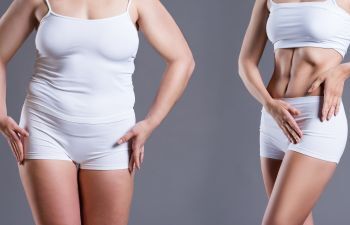
A body lift is a surgical procedure designed to remove excess skin left behind after massive weight loss. The operation reshapes the abdomen, flanks, lower back, thighs and buttocks in a single circumferential surgery. No amount of exercise will tighten skin once the collagen and elastin fibers have been permanently damaged from carrying 80, 100, or 150 extra pounds for years. Body contouring surgery is the only path to restoring a proportional frame.
As a double board certified plastic surgeon with fellowship training in microsurgery at Cleveland Clinic, I have performed more than 300 post-weight-loss body contouring procedures and more than 100 body lifts. I published peer-reviewed research on post-bariatric body contouring outcomes in Plastic and Reconstructive Surgery (2014), and I presented those findings at The Aesthetic Society national meeting in Montreal (2015). The research demonstrated patients who undergo body contouring after bariatric surgery maintain their weight loss better than those who do not. I bring this evidence-based perspective to every consultation at AMG Plastic Surgery in Herndon, Virginia.
Why Patients Seek a Body Lift
Patients pursuing a body lift after massive weight loss are dealing with more than appearance. Individuals seeking body contouring surgery after massive weight loss often have loose, hanging skin causing chronic rashes, skin infections, and hygiene challenges in the folds of the abdomen and groin. Mobility is limited. Clothing does not fit properly. Many patients describe avoiding social activities, intimacy, and exercise because of the excess tissue.
A body lift addresses all of these problems in a single operation. The physical and psychological improvements are among the most dramatic in reconstructive plastic surgery.
Are You a Good Candidate
You are a candidate for a lower body lift after weight loss if you meet these criteria:
You have lost significant weight, typically 80 pounds or more, through bariatric surgery, GLP-1 medications, or sustained lifestyle changes, and you have maintained a stable weight for at least three to six months.
Your BMI is ideally below 35. I operate on patients above this threshold in select cases, but complication rates increase with higher BMI. If your BMI is above 35, I will discuss whether additional weight loss before surgery is the safer path.
You are in good overall health. Heart disease, uncontrolled diabetes, and active smoking all increase surgical risk. Smokers must quit at least six weeks before and after surgery. Nicotine constricts blood vessels and impairs wound healing, which is dangerous in a procedure with this much tissue rearrangement.
You have realistic expectations about scarring. A body lift produces a permanent scar circling the body. For most patients, trading excess skin for a well-placed scar is a straightforward decision.
Nutritional status is critical for post-bariatric patients. Bariatric surgery creates vitamin and mineral deficiencies in protein, iron, B12, and zinc. I order lab work before surgery and correct any deficiencies first. Protein deficiency delays wound healing and increases the risk of wound separation.
The Consultation Process
During your consultation at AMG Plastic Surgery, I perform a thorough physical examination, take measurements, and assess the distribution of your excess skin from every angle. We review your medical history, weight loss timeline, and any medications including GLP-1s. I photograph the treatment areas for surgical planning purposes.
I explain which body lift procedure matches your anatomy, whether staging is needed, and what results are realistic. We discuss recovery timeline, time off work, and activity restrictions. You receive a detailed cost breakdown the same day.
Surgical Techniques: Lower Body Lift, Upper Body Lift, and Total Body Lift
A lower body lift, also called a belt lipectomy or circumferential body lift, uses a single incision wrapping around the entire waistline. Through this incision, I remove excess skin and fat from the front of the abdomen, the flanks, the lower back, the thighs and buttocks. The remaining skin is pulled taut, lifted, and secured. This complete lower body lift addresses the entire circumference of the midsection in one operation. Liposuction refines contour in areas where isolated fat deposits remain.
What is a lower body lift compared to the other variations? A lower body lift targets everything from the waistline down: abdomen, flanks, lower back, buttocks, and outer thighs. This is the most common body lift procedure performed after weight loss.
An upper body lift addresses the areas above the waist: back rolls, bra line, upper flanks, and sometimes the chest. For women, this is often combined with a breast lift or breast reduction.
A total body lift combines both upper and lower procedures. A full body lift of this scope is almost always staged across two separate surgeries spaced at least three months apart, because performing too much surgery at once increases complication risk without improving outcomes.
Less commonly referenced variations include the posterior body lift, which focuses on the back and buttock region, the mid body lift targeting the waistline and flanks specifically, and the 360 body lift, which is another term for the circumferential approach to the entire midsection.
A standard lower body lift procedure takes approximately five to seven hours under general anesthesia. I place the incision line within the underwear or bikini line in most patients. The scar fades significantly over 12 to 18 months and stays hidden under clothing.
How I Stage Post-Weight-Loss Body Contouring
Most patients who come to me after major weight loss need more than a single body lift. They need a staged surgical plan.
Stage one addresses the upper body first. Arm lift (brachioplasty), breast lift or reduction, and back lift are performed together. This reduces the weight of hanging tissue and improves mobility for subsequent recoveries.
Stage two is the lower body lift. The circumferential incision removes the abdominal apron, lifts the mons, tightens the lateral thighs, and elevates the buttocks.
Stage three addresses the lower extremities. A medial thigh lift removes excess skin from the inner thighs as a standalone procedure because the incision placement and tension vectors differ from the body lift.
Each stage is separated by a minimum of three months.
Recovery After a Body Lift
Lower body lift recovery is the most intensive recovery in body contouring. Patients need to prepare for it.
The first week is the hardest. You will have drains in place to collect fluid, and you will be wearing a compression garment continuously. Walking starts the day after surgery, short distances with assistance. Early walking reduces the risk of blood clots, the most dangerous complication of any extended surgery.
By week two, most patients are off prescription pain medication and moving around independently. Drains typically come out within seven to ten days.
By week four, most patients return to desk work. Physical jobs require six to eight weeks minimum. No heavy lifting or gym activity for six weeks.
By three months, swelling continues to resolve and the body’s shape emerges. Final lower body lift results continue refining for six to twelve months.
360 body lift recovery follows the same timeline. I provide a compression garment at surgery and refer patients for lymphatic drainage massage to speed swelling resolution. My follow-up schedule is structured: one week, three to four weeks, eight weeks, three and a half months, and six months post-op.
Risks and Realistic Expectations
Body lift surgery carries real risks. General surgical risks include infection, hematoma, seroma, and blood clots.
Seroma (fluid collection under the skin) is the most common complication after a body lift. Seroma rates in body lift patients are higher than in standard tummy tuck patients because of the larger surgical area. I use progressive tension sutures and drains to reduce this risk.
Blood clots (deep vein thrombosis) are a concern with any long surgery. I use compression boots during the procedure, blood thinners when appropriate, and early ambulation protocols.
Wound separation at the incision line occurs at higher rates in patients with nutritional deficiencies, uncontrolled diabetes, or a history of smoking.
Scarring is permanent. The scar fades and flattens over 12 to 18 months but will always be present.
Changes in skin sensation around the treatment area are common in the early months. Most sensation returns over the first year, though some areas have permanently reduced feeling.
Lower body lift regrets are most often tied to unrealistic expectations about scarring, recovery timelines, or results in the medial thigh area. I address all of these during the consultation so patients know exactly what to expect.
Cost of a Body Lift
Costs for a lower body lift vary based on factors including the extent of surgery, physician fees, anesthesia fees, and surgical center costs. A lower body lift cost typically falls between $15,000 and $30,000 depending on complexity.
360 body lift cost follows a similar range but increases if combined with additional contouring.
Insurance coverage is possible in limited situations. If you have documented skin rashes, infections, or functional impairment from hanging skin not resolved by conservative treatment for at least three months, your insurance company will sometimes cover a panniculectomy, the medically necessary component of removing the abdominal skin apron. The cosmetic contouring portions of a body lift are not covered.
I provide a detailed body lift cost breakdown at consultation. AMG Plastic Surgery offers financing options through CareCredit and other providers.
Body Lift vs. Tummy Tuck
A tummy tuck addresses the front of the abdomen only. A body lift addresses the entire circumference: front, sides, and back. If your excess skin is limited to the area below your belly button and above your pubic bone, a tummy tuck is sufficient. If the skin extends around to your flanks, lower back, and buttocks, a tummy tuck alone will leave those areas untreated and the result will look incomplete.
How to Choose a Surgeon for a Body Lift
A body lift is one of the most technically demanding operations in plastic surgery. The incision is long, the tissue planes are extensive, the blood loss potential is significant, and the margin for error in incision placement and skin tension is small. You need a board-certified plastic surgeon with specific training in post-weight-loss body contouring.
Ask whether your surgeon holds certification from the American Board of Plastic Surgery (ABPS), the gold standard credential for this specialty. Ask how many body lifts they perform per year. Ask to see body lift before and after photos of patients with a similar body type and weight loss history. Ask about their complication rates. These questions matter more for a body lift than for almost any other cosmetic procedure.
Why Patients Choose Dr. Ghaznavi
I have performed more than 100 body lifts and more than 800 body contouring cases across my career. My microsurgery fellowship at Cleveland Clinic trained me to manage complex tissue flaps, vascular anatomy, and wound healing in high-risk patients. This training is directly relevant to body lift surgery, where tissue viability and blood supply to large skin flaps determine whether the result heals well or breaks down.
I serve on the ASPS Cosmetic Subcommittee, where I contribute to clinical standards and in-service exam content for plastic surgery residents nationally. I have published 18 peer-reviewed papers across breast reconstruction, body contouring, and microsurgery. I was featured in The Daily Beast discussing post-Ozempic body contouring.
Frequently Asked Questions
A body lift removes skin and a small amount of fat. Most patients lose between 5 and 10 pounds from the tissue removal alone. This is not a weight loss procedure. It is a contouring procedure for patients who have already completed their weight loss.
Lower body lift results are permanent as long as you maintain a stable weight. The removed skin does not grow back. Normal aging continues to affect skin elasticity, but the dramatic excess will not return unless you regain significant weight. I share lower body lift before and after photos during consultation so you see documented outcomes from patients with a similar starting point.
The panniculectomy component (removal of the hanging abdominal skin apron) is sometimes covered if you have documented medical necessity: recurring rashes, skin infections, or functional impairment not resolved by conservative treatment. The cosmetic contouring portions of the body lift are not covered by insurance.
A panniculectomy removes the hanging abdominal skin apron and nothing else. It does not tighten the flanks, lift the buttocks, or contour the outer thighs. A body lift includes the panniculectomy but adds circumferential contouring of the entire lower trunk for a complete aesthetic result.
A lower body lift after weight loss is the same operation as a circumferential body lift or belt lipectomy. It uses a single incision around the waistline to remove excess skin from the abdomen, flanks, lower back, and outer thighs, and to lift the buttocks. It is the standard body lift procedure for patients who have undergone major weight loss.
Lower body lift recovery requires four to six weeks before returning to desk work and six to eight weeks before physical activity. Full recovery takes three to six months, with final results continuing to refine for up to one year.
Schedule a Consultation
If you have lost significant weight and want to discuss whether a body lift is the right procedure for your body, I encourage you to schedule a consultation at AMG Plastic Surgery. I will assess your anatomy, explain your options, provide a detailed cost breakdown, and build a surgical plan for your goals.
Call AMG Plastic Surgery at (703) 239-3190 or request a consultation online.
AMG Plastic Surgery, 13454 Sunrise Valley Drive, Herndon, VA 20171
Medically reviewed by Amir Mahan Ghaznavi, MD, MBA, FACS on
Posted on behalf of
13454 Sunrise Valley Dr., Ste 130
Herndon, VA 20171
Phone: (703) 239-3190
FAX: (571) 621-7593
Email: [email protected]