What Is an Arm Lift (Brachioplasty)
An arm lift, or brachioplasty, is a surgical procedure to remove excess skin and excess fat from the upper arms and restore a firm, toned appearance. Dr. Amir Ghaznavi, a double board-certified plastic surgeon with microsurgery fellowship training from the Cleveland Clinic, performs this procedure at AMG Plastic Surgery in Herndon, Virginia. Dr. Ghaznavi performed 60 brachioplasties in 2025 and is on pace for nearly 100 in 2026, volume driven by the wave of patients completing major weight loss with GLP-1 medications and bariatric surgery.
An arm lift done well removes hanging skin, recreates the deep contour of the armpit, and places the scar where the world will not see it. This page explains Dr. Ghaznavi’s technique in detail, so you understand exactly what separates his approach from a standard arm lift.
Why Patients Seek an Arm Lift
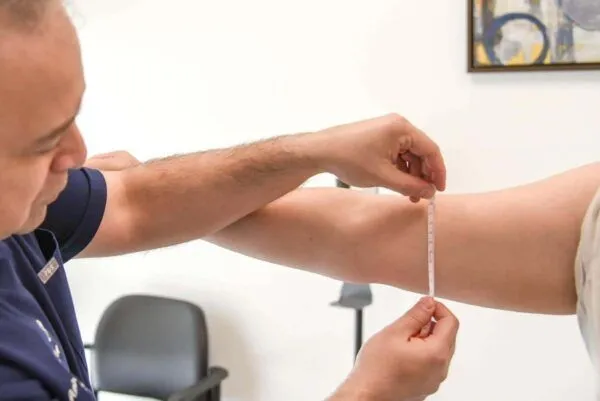
Loose skin on the upper arms rarely responds to diet and exercise. Once skin stretches past its elasticity, no triceps work will retract it. Most AMG arm lift patients arrive after major weight loss, when 50 to 150 pounds lost through GLP-1 medications or bariatric surgery leaves sagging skin along the inner arm. Others come because aging reduced their skin elasticity, because extra skin causes chafing, or because sleeves no longer fit. Many say the same thing at their initial consultation: they want the self-confidence to wear a sleeveless top.
Are You a Candidate for an Arm Lift
Candidates should be in good overall health, non-smokers, with realistic expectations. Dr. Ghaznavi holds firm standards because they protect your result:
Your weight must be stable for at least three months. Operating on a moving target produces a result the next 20 pounds will undo. AMG policy sets a BMI ceiling of 35.
You must stop smoking entirely. Dr. Ghaznavi will not operate on anyone who is smoking, because nicotine starves the skin flaps of blood supply and causes poor wound healing.
If you take a GLP-1 medication such as Ozempic, Wegovy, Mounjaro, or Zepbound, you will stop it two weeks before surgery and typically restart it two to three weeks after. Rapid medical weight loss thins the subcutaneous tissue, which raises the risk of wound separation along the incision. Dr. Ghaznavi counsels every GLP-1 patient on this openly, and it shapes both his closure technique and your aftercare.
I had an arm lift and a breast lift after weight loss, and I’m very pleased with the results. I’ve felt completely supported and well cared for this entire journey, and would absolutely recommend this practice to anyone seeking a good plastic surgeon.
The Consultation Process at AMG
Your consultation involves a review of your medical history, current medications, and medical conditions, followed by a physical examination of your arm anatomy: how much lax skin is present, your skin quality, and whether your armpit has dropped after massive weight loss. Dr. Ghaznavi then applies his tank top test. With your arms at your sides, no one in front of you or behind you should be able to tell you had an arm lift. Every incision decision serves that standard. You leave with a surgical plan matched to your anatomy and your aesthetic goals. A consultation fee applies and is credited toward the cost of your procedure.
Surgical Techniques for an Arm Lift
This is where arm lift surgery differs most from surgeon to surgeon. Dr. Ghaznavi matches one of four options to your anatomy, then executes specific maneuvers against the three common failures of this operation: widened or migrated scars, a flattened armpit, and recurrent sagging.
The Four Techniques
Renuvion skin tightening alone.
For minimal laxity and good skin quality, Renuvion (J-Plasma) tightens skin with no removal.
Short scar arm lift.
Reserved for redundancy confined to the upper third of the arm. The incision stays high and turns into the armpit. This is the one version performed under local anesthesia with intravenous sedation.
Standard arm lift.
For moderate laxity along the upper arm, performed under general anesthesia.
Extended L-brachioplasty.
Nearly always required after massive weight loss, because these patients almost always have ptosis of the armpit itself plus loose skin of the lateral chest wall. When the chest skin needs more than the extended incision addresses, Dr. Ghaznavi connects it to a breast lift incision as a J-plasty, or combines the arm lift with a bra line back lift as an upper body lift.
One option you will not find at AMG is the oblique axillary scar. Dr. Ghaznavi rejects it because an oblique scar across the armpit makes it impossible to recreate the deep axillary recess afterward.
Incision Placement: The Medial Bicipital Groove
Dr. Ghaznavi places his incision in the medial bicipital groove, the natural furrow along the inner arm. The skin there is thin, and thin skin heals into a finer, flatter scar, with further improvement as the incision site enters the armpit. With arms at your sides, the scar faces your torso, invisible from front and back. Marking is not guesswork. He identifies the groove, retracts the upper skin flap downward to preview the incision under tension, and marks the posterior line with your arm raised. Even then, the marking stays provisional. The final resection is decided on the table.
Intraoperative Tailor-Tacking
Rather than committing to a fixed pattern, Dr. Ghaznavi performs sequential tailor-tacking during surgery: he temporarily staples the planned closure from shoulder toward elbow, segment by segment, before any skin removal becomes permanent. This segmental technique confirms enough laxity exists for safe closure, prevents the constricting bands a misjudged resection creates, and controls tension along the entire scar line, because excess tension is the direct cause of poor scarring and scar widening. Only after the tacked closure passes inspection with the arm elevated does he remove skin.
Recreating the Armpit: Fixation to the Clavipectoral Fascia
The anchor of the technique happens in the axilla. Dr. Ghaznavi sutures the posterior skin flap to the clavipectoral fascia, the strong connective tissue layer deep in the armpit, with long-acting absorbable sutures, then brings the anterior flap to meet it. He never sutures the two skin flaps only to each other. Fascial anchoring recreates the deep hollow of a youthful armpit and tacks the scar into the axilla so it cannot migrate down the arm, one of the most common late failures of this surgery. He also performs an interrupted superficial fascial system repair along the closure, so internal support, not skin tension, holds the result.
Protecting Your Lymphatics
Chronic arm swelling after brachioplasty follows damage to lymph nodes and channels. Dr. Ghaznavi avoids them at three points. In the armpit, he stays in a very superficial plane so no lymph node tissue is disturbed. In the mid arm, he leaves a thin layer of fat over the biceps and triceps fascia, because lymphedema follows dissection below that fascial layer. And he stops the incision at the elbow crease, because crossing the joint raises lymphedema risk. His microsurgical training adds one more habit: the medial antebrachial cutaneous nerve runs a consistent course through the inner arm, and he dissects superficially along it to its branch point to preserve sensation.
Liposuction of the Posterior Arm and Elbow
Every arm lift at AMG includes tumescent liposuction of the posterior arm, behind the excision zone. The posterior arm grows heavy over time, and untreated weight there pulls the arm back into sagging. Dr. Ghaznavi uses a super wet technique rather than heavy tumescence, which limits swelling, and the fluid hydrodissects the superficial fascial layer, making it easier to stay above during excision. He treats the elbow as well, a treated area most surgeons skip. The tumescent anesthesia placed at the start also keeps the early recovery period comfortable.
Recovery After an Arm Lift
Dr. Ghaznavi uses no drains. He collapses the internal space with progressive tension sutures, limits undermining to what the closure requires, and leaves the posterior liposuction port open so fluid drains on its own the first days. He tells every patient in advance: this opening will drain, and that is the plan. This protocol, plus a compression garment worn for six weeks and lymphatic massage beginning the first week, keeps his rate of seromas well below the published average of roughly 6 percent.
Week one:
keep arms elevated, begin lymphatic massage, and perform the prescribed exercises, raising the arms, extending the elbows, and lowering them. Light activities and desk work resume in three to four days if you work from home. Drive once you can make sudden steering movements and are off narcotic pain medication.
Weeks two to four:
swelling and bruising decrease noticeably. No heavy lifting, keep everything under 10 pounds through week four.
Week six:
begin stretching to raise arms overhead. Nothing above shoulder height before this point. Compression ends. Strenuous activity and full gym work resume as swelling allows.
Three months:
about 80 percent of swelling resolved. Six months: full recovery, and your final results with a mature scar.
Scar care follows a defined protocol. Specialized silk tape first, silicone strips at week five to six, three rounds of microneedling at week six for any hypertrophic scar tissue, silicone gel after two to three months of strips, and strict SPF throughout to minimize scarring.
Risks and Realistic Expectations
Every surgery carries potential complications. Common complications of brachioplasty include infection, bleeding, fluid collections, and poor wound healing, along with temporary swelling, bruising, soreness, and numbness. Published data across more than 1,000 patients report seroma in about 6 percent, wound separation in about 7 percent, and widened scarring in about 10 percent. Each element of the technique above exists to push those numbers down: tailor-tacking against scar widening, fascial anchoring against migration, superficial dissection against lymphedema, and the no-drain closure against seroma.
Expect a permanent scar along the inner arm. The goal is a fine, well-placed scar, not an invisible one. Patients with thinned tissue after GLP-1 weight loss carry a higher risk of small wound separations. When revision is needed in Dr. Ghaznavi’s practice, it is most often a minor scar revision, an excision and reclosure of one scar segment. Future weight fluctuations or weight gain will alter your outcome, which is why weight stability is a candidacy requirement.
Cost of Arm Lift Surgery in Northern Virginia
Pricing depends on the technique your anatomy requires, the extent of skin removal, whether liposuction of other body areas or a combined procedure is planned, anesthesia, surgeon experience, and geographic market. A standard arm lift at AMG starts at $10,913. An extended arm lift, the technique most often needed after massive weight loss, starts at $13,173. Arm lift surgery is a cosmetic procedure and is not covered by health insurance.
AMG offers financing through CareCredit, Cherry, Alphaeon Credit, and Northwest Federal Credit Union. Cherry offers terms from 3 to 60 months with 0% APR available for qualifying applicants. A consultation fee applies and is credited toward the cost of your procedure. Current fee details are on our patient information page.
How to Choose a Surgeon for an Arm Lift
Ask every surgeon these questions and listen for specifics. How many arm lifts do you perform each year? Is the skin removal decided under real tension on the table? How do you keep the scar from migrating out of the armpit? If the answer does not involve anchoring to fascia, skin tension alone is holding the scar. How do you protect against lymphedema? The answer should name a dissection plane. Do you use drains, and what is your seroma rate? What is your written scar protocol? An informed decision starts with a surgeon who answers all six without hesitation.
Frequently Asked Questions About Arm Lift Surgery
A mini arm lift surgically removes a small amount of extra skin in the upper third of the arm through an incision hidden near the armpit. Renuvion tightens existing skin with helium plasma energy, no skin removal. Renuvion suits mild laxity with good skin quality. Once skin hangs, removal is the only correction, and Dr. Ghaznavi will tell you plainly which side of the line you fall on.
The deciding factor is your armpit and lateral chest, not just your arm. If loose skin stays confined to the upper arm and your armpit contour is intact, a standard arm lift addresses it. If your armpit has dropped and skin folds continue onto your chest wall, true of nearly all massive weight loss patients, you need an extended L-brachioplasty, sometimes combined into an upper body lift.
The scar runs in the medial bicipital groove, facing your torso. With arms at your sides, it is not visible from front or behind, which is why patients comfortably wear sleeveless tops after healing. The scar is permanent. The tension-control and fascial anchoring techniques exist to keep it fine, flat, and in place.
Most patients describe tightness rather than sharp pain. The tumescent anesthesia keeps the first hours comfortable, and skipping drains removes the most disliked part of traditional recovery. Expect prescribed pain medication for a few days, then a quick transition off narcotics.
Yes. Arm lifts combine with a breast lift, bra line back lift, or liposuction, and in massive weight loss patients Dr. Ghaznavi frequently performs the combination as an upper body lift in one operation.
You stop it two weeks before surgery and typically restart two to three weeks after. GLP-1 weight loss thins subcutaneous tissue, raising the chance of small wound separations, so Dr. Ghaznavi adjusts his closure and follows these incisions closely. Your weight must also be stable for three months first.
Why Patients Choose Dr. Ghaznavi
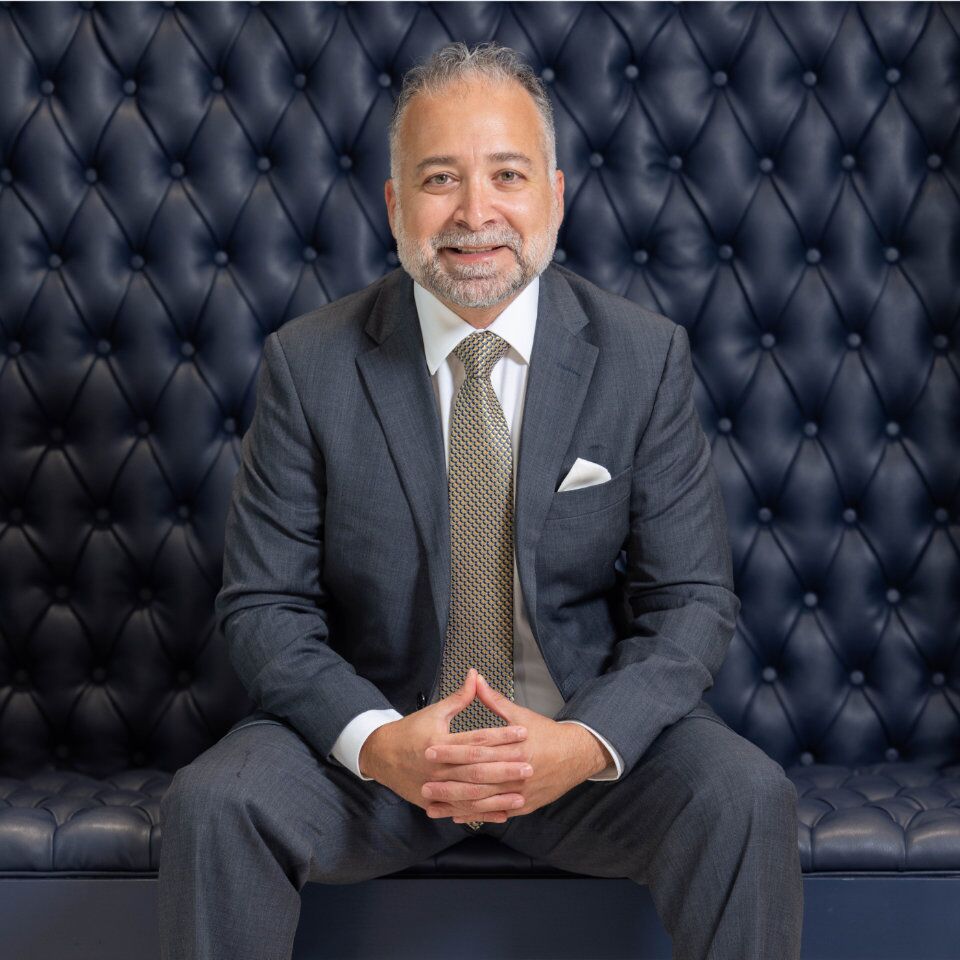
Dr. Ghaznavi is a double board-certified plastic surgeon with a Cleveland Clinic microsurgery fellowship, training reflected in how he handles nerves, vessels, and tissue planes in the arm.
He performed 60 brachioplasties in 2025 and is on pace for nearly 100 in 2026, among the highest arm lift volumes in Northern Virginia and Washington, DC.
AMG has earned 85+ Google reviews from real patients with a 5.0 star rating, plus 11 five-star RealSelf reviews.
A consistent outcome pattern in his arm lift patients: a recreated deep armpit contour and a scar that stays tacked in the axilla instead of drifting down the arm, the two results his clavipectoral fixation is designed to produce.
Schedule a Consultation
If loose skin on your arms is deciding what you wear, schedule a consultation with Dr. Ghaznavi at AMG Plastic Surgery in Herndon, Virginia. You will leave knowing which technique fits your anatomy, where your scar will sit, and what recovery looks like week by week. AMG serves Northern Virginia, including Reston, Fairfax, and Ashburn, plus Washington, DC. Call (703) 239-3190 or book online today.
Medically reviewed by Amir Mahan Ghaznavi, MD, MBA, FACS on