Transform Your Body After Massive Weight Loss
Dr. Amir Ghaznavi is a double board certified plastic surgeon (American Board of Plastic Surgery, American Board of Surgery) who specializes in lower body lift surgery, also called belt lipectomy, for massive weight loss patients. He has performed more than 100 lower body lift procedures and applies advanced techniques in tissue handling and blood supply management from his microsurgery training. He published peer-reviewed research on post-bariatric body recontouring and maintained weight loss outcomes in Plastic and Reconstructive Surgery (2014) and presented this research at the American Society for Aesthetic Plastic Surgery in Montreal in 2015. His published data demonstrated body lift surgery helps patients maintain their weight loss long-term.
Dr. Ghaznavi completed his plastic surgery fellowship at Henry Ford Medical Center and a microsurgery fellowship at Cleveland Clinic, one of the most selective microsurgery training programs in the country. He is certified by the American Board of Plastic Surgery, considered the gold standard for plastic surgery. He spent six years as Assistant Professor of Surgery at Case Western Reserve and Cleveland Clinic, where he managed complex post-bariatric and reconstructive cases. Dr. Ghaznavi serves on the ASPS Cosmetic Subcommittee since 2018, contributing to national standards for cosmetic surgery education.
What Is a Lower Body Lift?
A lower body lift, also called a belt lipectomy or circumferential body lift, is a body contouring surgery designed to remove excess skin and excess fatty tissue from the entire lower body in a single operation. The procedure not only removes excess skin but also tightens the underlying tissues, which leads to improved mobility and comfort in clothing. The horizontal incision wraps around the full circumference of the torso, addressing the lower abdomen, flanks, lower back, buttocks, outer thighs, and pubic region as one connected unit.
A complete lower body lift is one of the most transformative procedures available for massive weight loss patients who lose weight through bariatric surgery, GLP-1 medications such as Ozempic, Wegovy, Mounjaro, and Zepbound, or sustained lifestyle changes including diet and exercise. After substantial weight loss, the massive weight loss population is left with hanging skin wrapping around the hips and back and draping over the thighs and buttocks.
A lower body lift is not a weight loss procedure. The surgery is a contouring operation designed for patients who have reached their goal weight and have maintained a stable weight for at least six months.
Why Patients Seek a Lower Body Lift
Patients pursue a lower body lift for functional and aesthetic reasons after substantial weight loss. Hanging skin around the abdomen, hips, buttocks, and thighs causes chronic skin irritation, recurring rashes in skin folds, and hygiene challenges. Excess skin restricts mobility during exercise and daily activity. Clothing fits poorly regardless of the patient’s underlying body shape. Many patients report the emotional toll of loose skin offsets the accomplishment of their weight loss, particularly those who lost 80 or more pounds through bariatric surgery or GLP-1 medications (Ozempic, Wegovy, Mounjaro, Zepbound). A lower body lift addresses the circumferential skin excess no other single procedure removes.
I’m very happy and pleased with the quality of care and treatment I received at AMG Plastic Surgery. Dr Ghaznavi was very thorough, attentive and caring before, during and after my surgery and continues to be. From the moment I walked in the office, Pam greeted me and helped calm my nerves and has been supportive throughout the entire process and continues to be. I highly recommend this practice for any plastic surgery you need. You will be well taken care of.
Lower Body Lift vs. Tummy Tuck vs. Belt Lipectomy
| Criteria | Belt Lipectomy / Lower Body Lift | Standard Tummy Tuck | Panniculectomy |
|---|---|---|---|
| Scope | 360-degree contouring | Front of abdomen only | Lower abdominal apron only |
| Ideal patient | Circumferential skin excess | Localized abdominal laxity | Functional skin apron |
| Recovery | 4 to 6 weeks to normal activity | 2 to 4 weeks | 2 to 4 weeks |
| Scarring | Circumferential, hidden in waistband | Hip-to-hip, hidden below bikini line | Hip-to-hip, lower placement |
| Insurance | Cosmetic only | Cosmetic only | Possible if medically necessary |
Tummy tuck (abdominoplasty): Addresses the front of the abdomen only. The incision runs hip to hip without extending around the back.
Lower body lift (circumferential body lift): The incision wraps completely around the body, addressing front, sides, back, buttocks, outer thighs, and pubic region. Belt lipectomy is another name for this procedure.
Panniculectomy: Removes the lower abdominal apron without muscle repair. Sometimes covered by insurance when medically necessary.
Who Is a Good Candidate for a Lower Body Lift?
Candidates for body contouring should be in good health, non-smokers, and have maintained stable weight for at least six months. Individuals with uncontrolled diabetes or hypertension face higher surgical risk and are not ideal candidates.
Ideal candidates:
- Have experienced substantial weight loss (typically 80+ pounds) through bariatric surgery, GLP-1 medications, or sustained lifestyle changes
- Have hanging skin around the full circumference of the lower body
- Are at or near their goal weight, with a BMI below 35 for optimal safety and results
- Do not smoke. Smoking severely impairs the healing process and increases the risk of complications. Candidates must quit at least 4 to 6 weeks before surgery
- Have completed family planning before undergoing this procedure. Future pregnancy stretches the repaired muscles and skin
- Have realistic expectations about the outcome. The surgery leaves permanent scars, though they are often well hidden
The Consultation Process
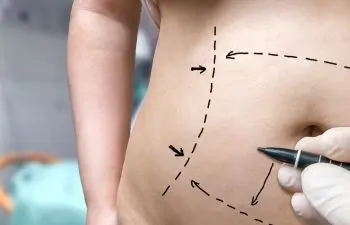
The initial consultation involves evaluating the patient’s medical history and discussing surgical goals. Dr. Ghaznavi reviews previous surgeries, current medications, and the weight loss journey. He examines body anatomy while the patient is standing to assess the degree and distribution of excess skin and marks the planned incision lines. Lab tests confirm medical fitness for a major surgical procedure.
Dr. Ghaznavi builds a customized surgical plan and discusses pre-operative preparation: stopping smoking, discontinuing blood thinners and anti-inflammatory medications, and arranging help at home. Patients should plan for at least 2 to 3 weeks off work and 4 to 6 weeks before resuming normal activities.
Surgical Technique
Lower body lift surgery is performed under general anesthesia and takes 4 to 7 hours depending on the extent of skin excess and whether liposuction is combined.
Incision:
Dr. Ghaznavi makes a circumferential incision wrapping around the entire lower body at the natural waistline. The resulting scar sits where a belt or waistband would rest.
Excess skin and fatty tissue removal:
Dr. Ghaznavi removes excess fat and excess fatty tissue in a circumferential pattern. A significant amount of tissue is removed, often several pounds. Liposuction refines body contours adjacent to the incision line, and tighten skin protocols use the natural traction of the closure to firm the contour.
Abdominal muscle repair:
Underlying abdominal muscles are tightened through plication. Dr. Ghaznavi uses deep sutures to repair the abdominal wall and restore core support. Mesh is used only when a true hernia is present.
Buttock and thigh lifting:
As circumferential skin is removed and remaining tissue is pulled upward, the buttocks and outer thighs receive a natural lift. Tissue is secured with deep sutures at multiple layers.
Pubic region contouring:
The incision provides access to the pubic region. Dr. Ghaznavi addresses mons pubis descent as part of the procedure.
Closure:
The incision is closed in layers. Drains are placed at multiple sites to drain excess fluid and prevent fluid collection, typically remaining for 1 to 3 weeks. Compression garments are applied immediately.
Recovery Process After a Lower Body Lift
Recovery typically ranges from 6 to 8 weeks, with restrictions on heavy lifting and strenuous exercise. The initial healing phase involves managing discomfort, swelling, and bruising. Most patients return to normal activities within four weeks but should avoid strenuous activities for at least six weeks.
First two weeks:
Significant swelling, bruising, and discomfort across the midsection, back, and thighs, managed with prescribed pain medication. Walking begins the day of surgery to prevent blood clots. Patients wear compression garments 24 hours a day to reduce swelling and support the healing process.
Weeks 3 to 6:
Swelling decreases. Most post weight loss patients return to desk work or work from home by week 3 to 4. Drains are removed (typically by week 2 to 3). Compression garments transition to daytime wear.
Weeks 6 to 12:
Dr. Ghaznavi clears patients to gradually resume exercise, starting with light cardio and progressing to core work. Scars begin to mature.
3 to 24 months:
Full recovery takes 6 to 12 months for most visible improvement. Scars mature from red and raised to flatter and lighter over 12 to 18 months. Final results take up to two years to be fully apparent. Maintaining results long-term requires a stable weight, regular exercise, and completed family planning before surgery.
Lower Body Lift Scars
The circumferential scar is permanent and sits within a belt or waistband line, concealed by most clothing but visible in swimwear. Silicone scar care begins around 3 weeks once the incision is fully closed. At one year the scar transitions from raised and pink to flatter and closer to skin tone. Most patients reach final scar appearance at 18 to 24 months. To minimize scarring, sun protection, silicone sheets, and topical scar products during the first 12 months are essential. Skin elasticity, recovery time, and genetic factors influence final scar outcome.
Potential Complications and Risks
Lower body lift surgery is safe when performed by a board-certified plastic surgeon in an accredited facility, but it is a major operation. Common complications include infection, bleeding, fluid collections, and poor wound healing.
- Wound separation. The most common complication specific to the lower body lift. Minor wound separations at high tension points occur during recovery and are managed with in-office dressing changes.
- Wound healing delays. Smoking, diabetes, and obesity increase the risk of delayed healing.
- Seromas (excess fluid collection). Fluid accumulates beneath skin flaps. Drains reduce this risk. Post-drain seromas are managed with needle aspiration.
- Infection. Rare with proper surgical technique and antibiotic protocols.
- Blood clots (DVT). Risk with any major surgery. Early walking and sequential compression devices reduce this risk.
- Numbness. Temporary loss of sensation across the abdomen, back, thighs, and buttocks resolves over months.
- Need for revision. Some patients benefit from a minor revision after initial healing. Dr. Ghaznavi waives the surgeon fee on all revisions.
Lower Body Lift as Part of a Post-Weight-Loss Staging Plan
For patients with excess skin across multiple body areas, Dr. Ghaznavi stages procedures rather than addressing the full body in one session.
Stage 1 (Upper body):
Arm lift (brachioplasty), breast lift or breast surgery, upper back lift. 3-month recovery before next stage.
Stage 2 (Midsection):
Lower body lift addressing abdomen, flanks, back, buttocks, outer thighs, and pubic region in one operation. 3-month recovery.
Stage 3 (Refinement):
Medial thigh lift for inner thigh skin excess. Additional liposuction if needed.
The staged approach allows each surgical site to heal fully before the next procedure, reduces total anesthesia time, and produces better body lift results. Dr. Ghaznavi’s published research on post-bariatric body recontouring supports this approach.
Lower Body Lift Cost
The cost of a lower body lift depends on the extent of surgery, whether liposuction is combined, anesthesia, and surgical facility fees. A lower body lift typically costs more than a standard tummy tuck because it addresses the full circumference of the body. Because every plan is built around the patient’s specific anatomy and the amount of tissue to be removed, Dr. Ghaznavi provides individualized pricing during your consultation rather than a fixed quote online.
A lower body lift is a cosmetic procedure and is not covered by health insurance. The panniculectomy component (removal of a functional skin apron) is sometimes eligible for insurance coverage in documented cases. Dr. Ghaznavi’s office advises on documentation requirements.
A consultation fee applies and is credited toward the cost of your procedure. Visit our patient information page for current fee details.
AMG Plastic Surgery partners with four financing providers: CareCredit, Cherry, Alphaeon Credit, and Northwest Credit Union. Cherry offers terms from 3 to 60 months with 0% APR available for qualifying applicants.
How to Choose a Surgeon for a Lower Body Lift
Choosing a board-certified plastic surgeon is essential for ensuring safety and achieving excellent results. Surgeons should be certified by the American Board of Plastic Surgery (ABPS), which is considered the gold standard for the specialty. Surgeons specializing in body contouring and performing hundreds of cases each year tend to provide more consistent results.
Patients should ask to see before and after photos of previous surgeries to evaluate the surgeon’s skill and aesthetic results. An experienced plastic surgeon discloses technique, anesthesia approach, surgical center accreditation, and revision policy during the consultation.
Why Choose Dr. Ghaznavi for a Lower Body Lift in Northern Virginia
- Double board certified by the American Board of Plastic Surgery and American Board of Surgery
- More than 100 career lower body lift procedures
- Published peer-reviewed research on post-bariatric body recontouring (PRS, 2014) and complex abdominal wall reconstruction (JPRAS, 2016)
- Presented post-weight-loss body contouring research at The Aesthetic Society (Montreal, 2015) and ASPS national meetings
- ASPS Cosmetic Subcommittee member since 2018
- Microsurgery fellowship at Cleveland Clinic, training in advanced techniques for tissue handling and blood supply management
- Six years as Assistant Professor of Surgery at Case Western Reserve / Cleveland Clinic
- Staged post-weight-loss contouring protocol with defined 3-month recovery intervals
- Revision policy: surgeon fee waived for all revisions
- 85+ verified Google reviews from real patients
Frequently Asked Questions
Belt lipectomy is another name for a lower body lift. The terms are interchangeable.
A belt lipectomy is a 360-degree procedure addressing the abdomen, flanks, back, buttocks, outer thighs, and pubic region. A panniculectomy removes only the lower abdominal apron without muscle repair. Panniculectomy is sometimes covered by insurance when medically necessary. Belt lipectomy is not.
The deciding factor is where excess skin sits. If loose skin is limited to the front of the abdomen, a tummy tuck addresses it. If excess skin wraps around the hips, lower back, buttocks, and outer thighs, a lower body lift removes it in one circumferential operation. Dr. Ghaznavi evaluates the full distribution of skin laxity during the consultation and recommends the procedure matched to your anatomy.
A complete lower body lift takes 4 to 7 hours under general anesthesia.
Plan for 2 to 3 weeks off work, 4 to 6 weeks before normal activities, and 6 to 8 weeks before full exercise clearance. Final body lift results take 6 to 12 months, with subtle tissue remodeling continuing for up to two years.
Sleep on your back with pillows under your knees to keep legs elevated and tension off the lower abdomen, thigh, and lower back.
Most patients return to light, sedentary work from home within 2 to 3 weeks.
Avoid traveling for at least 4 weeks. Sitting for extended periods increases blood clot risk.
Liposuction and mons pubis contouring combine with the lower body lift. Arm lift, breast surgery, and medial thigh lift are staged separately for safety.
Schedule Your Lower Body Lift Consultation in Northern Virginia
If you have experienced substantial weight loss and have excess skin around your midsection, back, buttocks, and thighs, schedule a consultation with Dr. Ghaznavi at AMG Plastic Surgery in Herndon, Virginia. AMG serves patients throughout Northern Virginia, including Fairfax, Ashburn, Reston, Sterling, Loudoun County, and the greater Washington, D.C. area.